
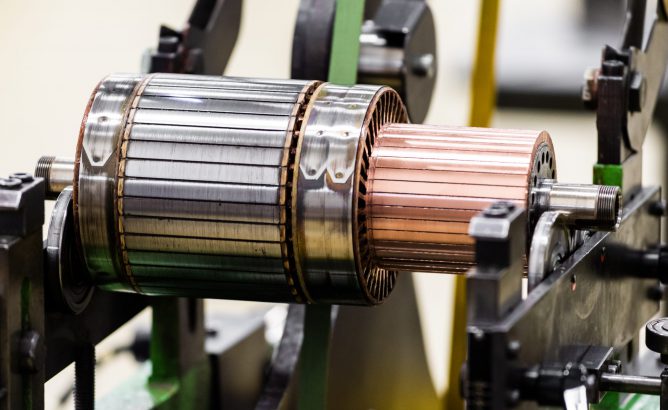
What Causes Aircraft Starter-Generator Failure — and What a Quality Rewind Restores
The starter-generator is one of the hardest-working components on the aircraft. It does two jobs in one unit — spinning the engine up at start, then generating electrical power for the rest of the flight — all while enduring high heat, constant vibration, and thousands of duty cycles. That dual role and harsh environment make it a common source of electrical squawks. Understanding why these units fail helps you catch problems early and know what a good repair should deliver.
The common failure modes
- Insulation breakdown. The most frequent root cause. Heat and vibration degrade the winding’s insulation over enough cycles until it can no longer do its job — leading to shorted turns, ground faults, or phase shorts. Contamination from oil, moisture, or debris accelerates it.
- Brush and commutator wear. Brushed units rely on brushes riding against a commutator. Worn brushes, a scored commutator, or poor brush seating cause arcing, output problems, and further damage if left unaddressed.
- Bearing wear. As bearings wear they introduce play and vibration, which stresses the windings and commutator — one failure mode feeding another.
- Thermal damage. Sustained overheating can damage the windings, commutator, brushes or the field pole shoes.
The warning signs
Failures rarely happen without notice. Common precursors include intermittent or low electrical output, fluctuating voltage, visible arcing or unusual brush wear at inspection, increased vibration or noise, and a burnt smell or discoloration on the unit. Catching these early often means the difference between a straightforward rewind and a unit damaged beyond economical repair.
What a quality rewind actually restores
“Rewind” can mean very different things depending on the shop. A quality rewind is far more than new copper. It includes selecting the correct insulation system for the unit’s thermal class, proper vacuum-pressure impregnation to seal and protect the new winding, attention to the brushes and commutator, inspection and replacement of bearings as needed, and proper balancing of the rotating armature assembly.
Critically, it also includes a full test sequence — surge testing, high-potential (hi-pot) testing, and resistance testing — that proves the unit performs to specification before it ships. That test-and-documentation package is what separates a rewind you can trust from one that simply looks finished, and what allows the unit to return to service with proper traceability and documentation.
The bottom line
Most starter-generator failures trace back to insulation breakdown, brush and commutator wear, or bearings — and most are repairable when caught in time. But the value of a rewind depends entirely on how it’s done. Ask any shop what their test and documentation package looks like — not just the price and the turn time. That’s where quality lives.
Aircraft Electric Motors repairs and rewinds aircraft starter-generator sub components for private, military, and commercial operators, with full electrical testing and traceability on every unit. Aircraft Electric Motors is full certified as FAA 145 / EASA 145 / UK CAA 145. We also manufacture NEW electrical assemblies and we are AS9100D & NADCAP certified.
Seeing warning signs on starter-generator armatures or fields? Send it to AEM for evaluation and rewind.
[Click here to request a quote or information]
Frequently Asked Questions
What is the most common cause of starter-generator failure?
Insulation breakdown from heat and vibration is the most frequent root cause, often accelerated by contamination.
What are the warning signs of a failing starter-generator?
Low or intermittent output, fluctuating voltage, visible arcing or brush wear, increased vibration or noise, and a burnt smell or discoloration.
Can worn starter-generator parts be rewound, or does they need replacing?
Yes they can always be rewound (unless severe bearing failure damages the core).
What should a quality rewind include?
The correct insulation system, vacuum-pressure impregnation, brush and bearing attention, Armature balancing, and a full surge, hi-pot, resistance and functional test sequence with FAA/EASA/UK return to service documentation.